
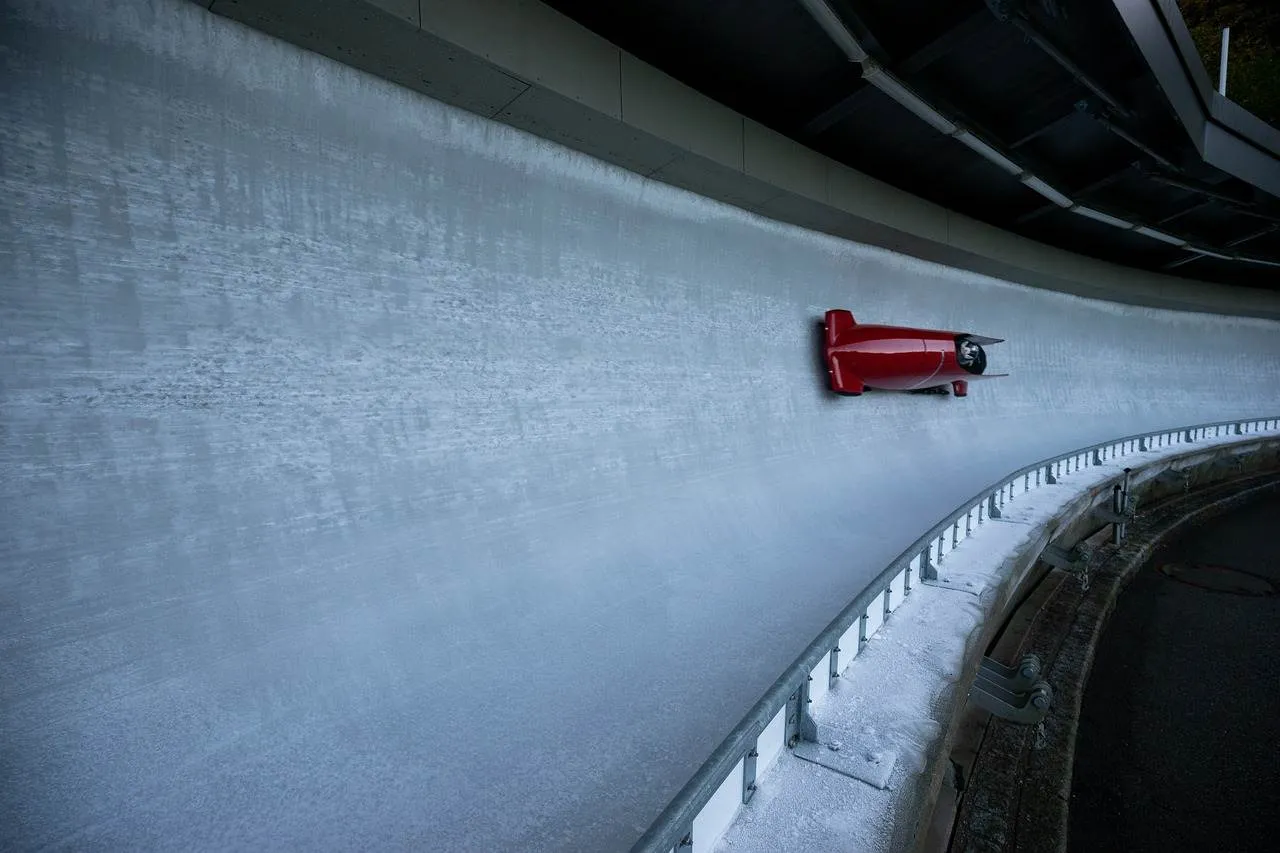
It's not just speed. It is not just courage. In the Olympic competitions of bobsledding, sledding and skeleton, every thousandth of a second can make a difference, and it all starts with an invisible but decisive element: the ice.
Behind the breathtaking curves, the 80-plus mph straightaways and the tenths of a second that separate a medal from anonymity, there is technical work of absolute precision. A work of engineering, science and daily maintenance. But how do you prepare a bobsled track? Who takes care of it? And what technologies are being used today-especially in the U.S. and ahead of the Milan Cortina 2026 Olympics?
A track made of steel and ice: how a toboggan sports track is created
The bobsled, skeleton and toboggan runs are impressive structures. They can exceed 1,500 meters in length, with slopes as steep as 15% and elevated curves to put roller coasters to shame. But their soul is not just architectural: it is thermal.
La basic structure is made of reinforced concrete, often covered with a surface of steel or insulating polymer. Above this surface, the ice cover, which must be uniform to the millimeter, with constant thickness and a temperature between the -7 and the -12°C.
The heart of the system: the cooling machines
Modern slopes are equipped with underground refrigeration systems, similar to ice skating rinks, but on a much larger scale.
- Ammonia or glycol pipes pass under the runway, cooling the surface.
- The plant is operated by refrigeration plants working around the clock, with automated systems that adjust the temperature according to the outdoor climate and the type of race.
- The whole thing is controlled by advanced software that monitor each section of the track: curves, straights, changes in slope.
In the United States, tracks such as that of the Lake Placid Sliding Center or that of Park City, Utah, are equipped with the most advanced technologies, some developed in collaboration with NASA and thermal engineering companies.
The finish: handmade ice...with Olympic precision
After the technical preparation, comes the most delicate work: the ice finishing.
This is where the "ice makers", skilled technicians who use steel blades, hand scrapers and pressurized water to smooth, adjust and perfect every inch of the track. In certain places, even an air bubble in the ice Can affect the sliding of toboggans.
During the competitions, this team works between descents, intervening with portable machinery to ensure a fair track for all.
What is being used in the U.S.: innovation and sustainability
American trails are often cutting edge also from the environmental point of view:
- Energy recovery systems To reuse the heat produced by the plants.
- Solar panels to power the controllers.
- Ice treatments that use demineralized water For greater transparency and strength.
- Artificial intelligence to adjust energy consumption based on weather forecast.
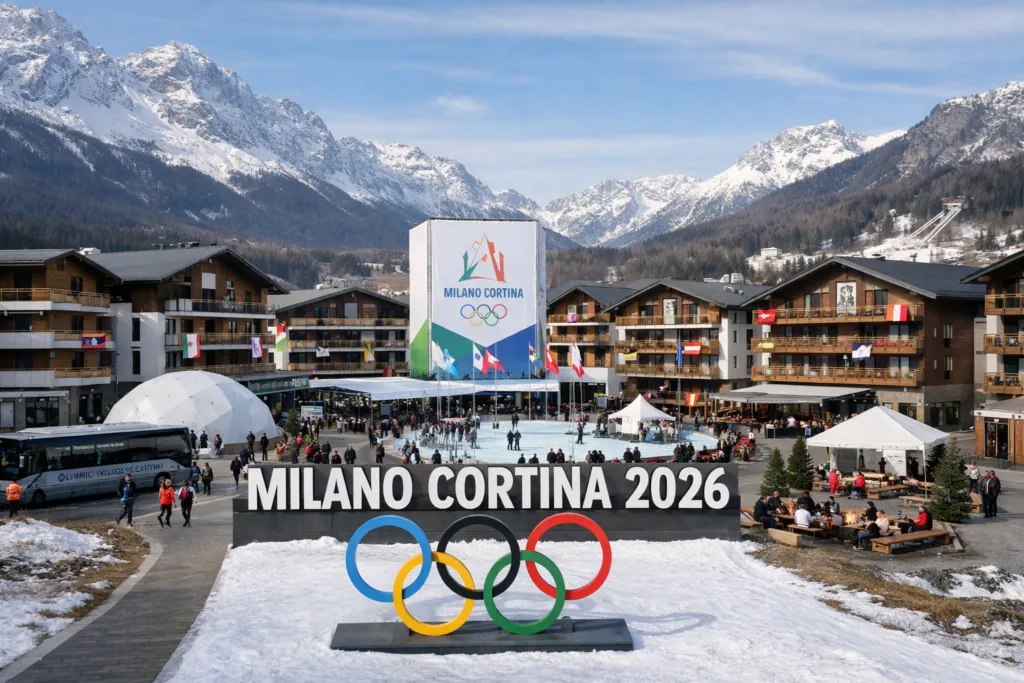
These solutions are also already being implemented for Milan Cortina 2026, particularly on the runway of Cortina d'Ampezzo, which will be renovated with an eye to the energy sustainability and to the technical precision.
Curiosity: how much does it cost to maintain a track?
The cost of maintaining an Olympic bobsled track can exceed the 500,000 euros per season, including electricity, skilled labor, facilities maintenance, and water.
It is an expensive sport, but also a spectacular one. And thanks to increasingly advanced technologies, it is now possible to keep the slopes in perfect condition even in relatively high outside temperatures.
Conclusion: ice making a difference
In bobsledding and luge, the ice is not just surface: is speed, control, safety. Every curve is a work of engineering art, every straight a rectangle of absolute precision.
Behind that ice is a world that works quietly, night after night, to transform matter into adrenaline. A world made up of science, sweat and passion, ready to shine again in Milan Cortina 2026.




 Italiano
  English
  Русский
  Français
  Deutsch
  简体中文
简体中文 