
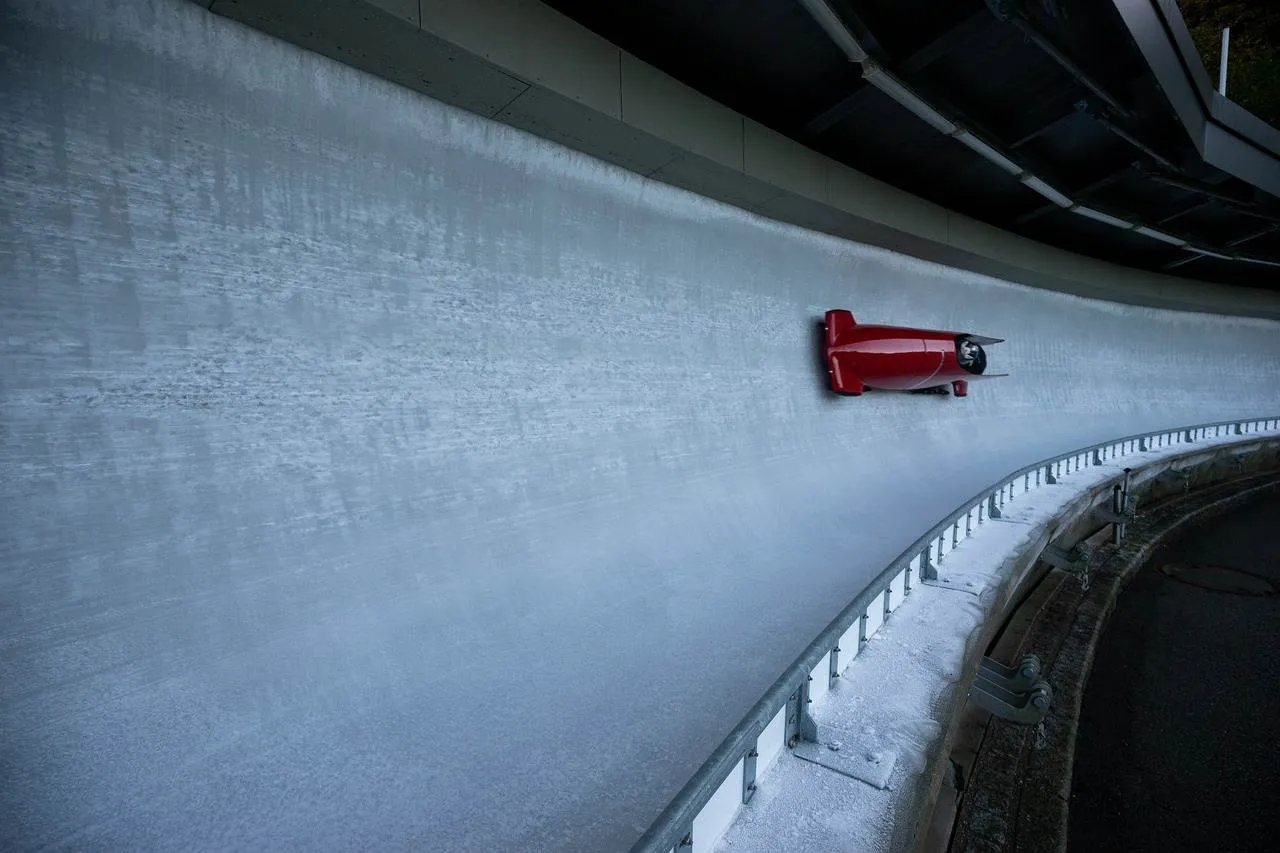
When snow meets speed
Today we know it as one of the most spectacular and adrenaline-pumping winter sports, but the bob - o bobsleigh, as they call it in English - was born almost by accident. Its history has its roots in the Swiss mountains at the turn of the nineteenth and twentieth centuries, when winter was still the realm of silence, fresh snow, and English tourists seeking new thrills.
From winter vacations to the first bobsled
In the late 19th century, the Alpine town of St. Moritz, Switzerland, began to become a vacation destination for wealthy Britons. Accustomed to spending the colder months in exotic or climatically favorable places, many of them were won over by the beauty of the Alpine winter.
During long snowy stays, tourists looked for fun ways to spend time outdoors. Some started sliding down the icy roads between hotels and nearby villages using simple wooden toboggans. But it didn't take long for British ingenuity met the desire for adrenaline..
The invention of the bobsled: two sleds and an idea
Around the 1888, some vacationers thought of joining two sleds together, adding a steering bar and thus making the structure drivable. The new sled was longer, heavier, and much faster. The first rudimentary bobsleigh, capable of speeding on icy roads at unprecedented speeds.
The name bobsleigh results from the action of "rocking back and forth" (to bob), which riders used to push the sled at the start of the race. It was not yet a sport, but an exhilarating - and somewhat dangerous - pastime.
The first artificial slopes
Soon, local authorities began to worry about the increase in incidents between tourists and locals. Thus, in the 1897 was built in St. Moritz the Cresta Run, the first track dedicated to bobsledding to the world. It was made entirely of natural ice, carved along the slopes, and quickly became the center of a new sporting discipline: the bobsleigh ride on an icy slope.
Bobsleigh becomes an Olympic sport
The new discipline developed rapidly, and in the 1923 was founded the FIBT (Fédération Internationale de Bobsleigh et de Tobogganing), now known as IBSF (International Bobsleigh & Skeleton Federation).
The following year, in the 1924, the bobsled made its first appearance at the Winter Olympic Games by Chamonix, in France, with the race to four men. It was an immediate success, and from that moment on, bobsledding became a permanent presence on the international sports scene.
- The race to two men was introduced in the 1932.
- Le women They did not officially enter Olympic competition until the 2002, after decades of struggle for inclusion.
Technical evolution and new frontiers
Over the years, the bobsled has undergone a radical transformation:
- Vehicles went from the wood at metal, up to modern materials in carbon fiber and kevlar.
- The teams perfected every detail: Aerodynamics, position of athletes, explosive starts and pinpoint control in turns.
- The slopes are now sophisticated structures, up to 1,600 meters long, with parabolic curves, straights and slopes designed to the centimeter.
Modern bobcats can exceed the 150 km/h, with G forces similar to those experienced by fighter pilots. The margin between victory and defeat is often measured in hundredths of a second.
Curiosities
- The lighter bobsleigh Is not necessarily the fastest. Each team must respect weight limits imposed by the regulations, including the vehicle and the athletes.
- The dominant teams in modern bobsledding include. Germany, Switzerland, Canada and the United States, but also tropical countries such as the Jamaica have written memorable pages in the history of bobsledding.
- The film "Cool Runnings" (1993), inspired by the true story of the Jamaican team at the 1988 Olympics, made the sport known even to those who did not follow it.
That of the bobsled is a story of invention, passion and speed, born almost as a joke among English friends and transformed into one of the most fascinating and technically advanced winter disciplines.
Today, every start, every turn and every finish line still tell a little bit about that initial run on an icy road in the Swiss Alps.



 Italiano
  English
  Русский
  Français
  Deutsch
  简体中文
简体中文 