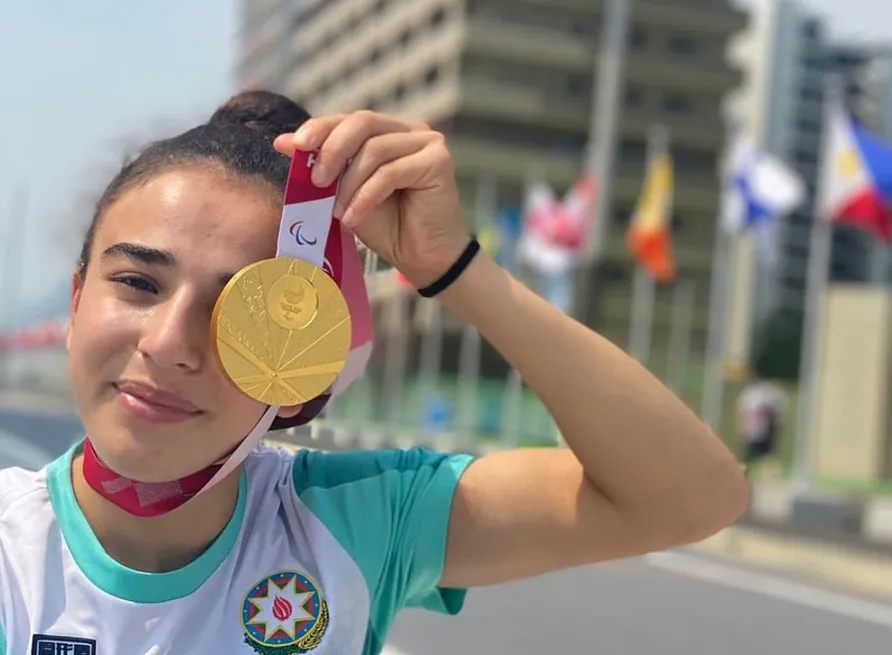
In the Paralympic world, where every medal is often the result of a twofold battle-against the opponent and against one's own limitations-the case of Shahana Hajiyeva Has left a heavy shadow. Azerbaijani judoka, class of 2000, winner of gold at the Paralympics in Tokyo 2020 in the J2 category (reserved for visually impaired athletes), was disqualified for life for Having competed without visual impairment.
A resounding discovery
Everything changed in 2025, during pre-race medical checks at the World Parajudo Championships in Astana, Kazakhstan. Doctors determined that Hajiyeva had no visual impairment, indeed: his eyesight resulted fully functional.
In just a few weeks, the news went around the world. The International Paralympic Committee made a drastic decision: disqualification for life from all Paralympic competitions and revocation of the gold medal conquered in Japan.
An injury to the credibility of the sport
The incident prompted a wave of reactions and questions. How was it possible for an athlete to pass international screening to participate in Tokyo 2020 without the required visual requirements? The classification system for Paralympic athletes, already complex and delicate, ends up under indictment for possible Flaws in medical screening and disability verification.
Some experts talk about criteria still too interpretable, others point the finger at a national certification management often opaque.
The paradox of the athlete who "could see just fine"
Hajiyeva's story, first told by the Italian media and later picked up by numerous international news outlets, has a painful paradox: while thousands of Paralympic athletes struggle every day to overcome barriers, someone used disability as a mask to compete where he or she was not entitled.
The Azerbaijani judoka, already considered a promise of Paralympic sports, had built her fame on the tatami, beating real opponents ... but with a false condition. A damage to trust, the spirit of the Games, and the perception of the value of inclusion in sports.
What changes after the Hajiyeva case?
The International Paralympic Committee has already announced a review of classification protocols medical. National federations, including those in Europe and Asia, have been asked to update their methods of validating athlete profiles, especially in categories related to non-visible disabilities (such as vision, coordination, or sensory perception).
This case then becomes a symbolic precedent, but also a wake-up call for the Paralympic movement: Strengthen transparency to protect real athletes.
The Hajiyeva case is not just sports news: it is a ethical watershed. In a context where authenticity is the real gold, those who cheat undermine the foundations of the sport itself. Paralympic judo, a symbol of balance, respect and discipline, emerges wounded but also with a new awareness: Protecting integrity is now more of a priority than ever before.

 Italiano
  English
  Русский
  Français
  Deutsch
  简体中文
简体中文 