
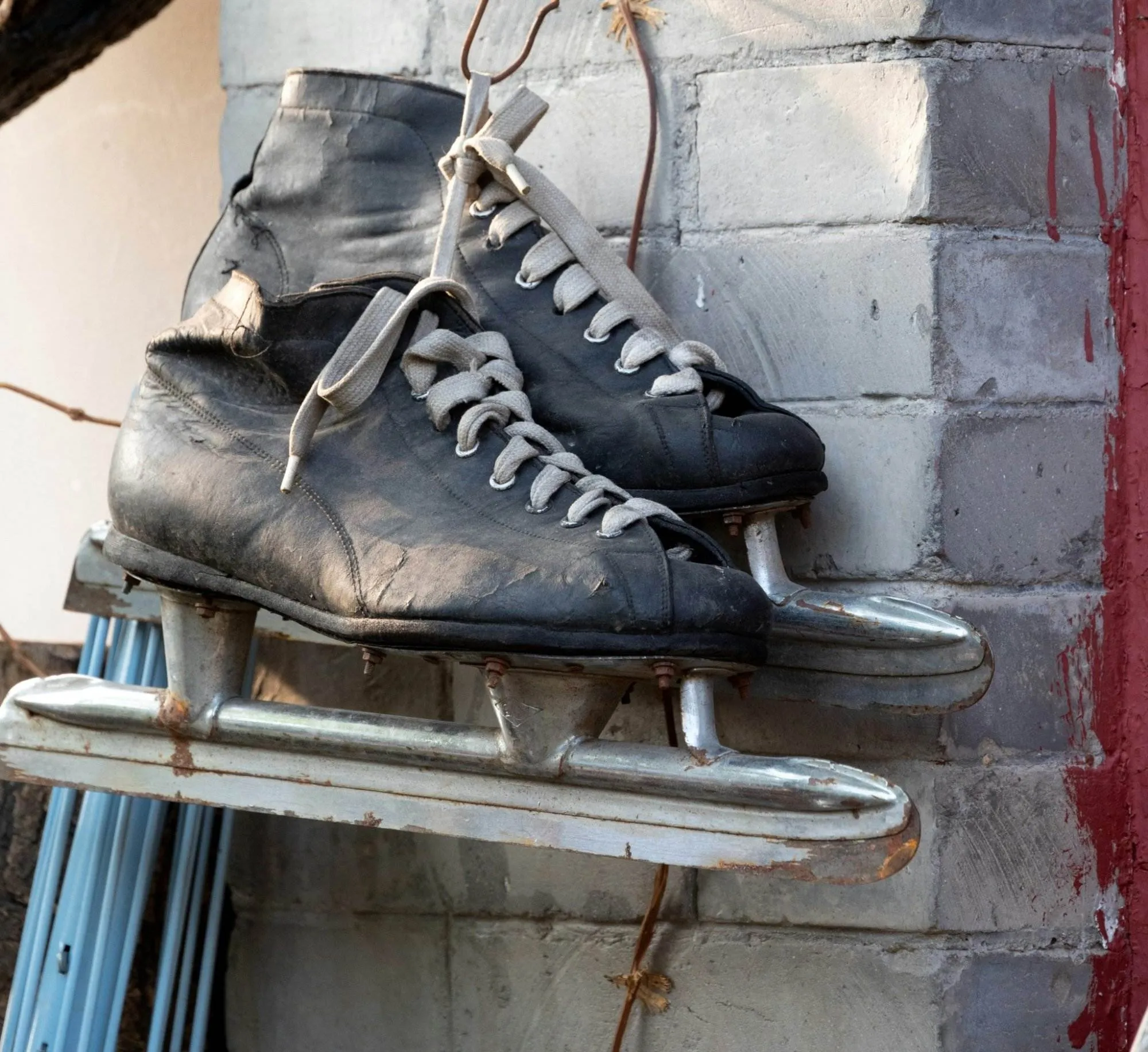
The history of the ice skates begins long before Olympic competitions and choreographed dances. It is an affair rooted in the human need to move in hostile winter environments, made up of simple but ingenious solutions, primitive materials and insights that have spanned the millennia.
First steps on the ice: bone skates
The earliest traces of skates date back to ca. 4,000 years ago, during the Bronze Age. They were found in areas such as the Finland, the Sweden, and the current Russia, where long winters froze lakes and rivers, turning them into natural thoroughfares.
These primitive skates were made with long animal bones - often horse or reindeer shinbones or femurs-sharpened at the base to glide across the ice. They were tied to the feet with sinews or leather strips, and used pointed sticks to push themselves, similarly to cross-country skiing.
From bone to metal: the birth of the blade
As technologies evolved, skates also changed. During the Middle Ages, particularly in the Netherlands, the first models appeared with iron blades mounted on wooden bases. Unlike bone skates, these allowed a true gliding motion, without the use of sticks.
The intense cold and the capillary presence of frozen channels made the skating an everyday means of transportation in the Netherlands. Before long, however, the utilitarian function gave way to the pleasure of the act: there arose the first races, i ice games, and a real skating culture.
From transportation to leisure: skating comes to Europe
During the 16th and 17th centuries, ice skating became widespread in the european courts. A London and to Paris, frozen lakes and ponds became gathering places. People no longer skated just out of necessity, but for entertainment and fashion.
The shift was crucial: the skate was no longer just a tool, but was beginning to become an extension of the human body, a means of expressing balance, speed and grace.
The 19th century and figure skating
The real transformation came in the nineteenth century, with the advent of the figure skating. The pioneer was Jackson Haines, an American who combined the movements of skating with ballet techniques. He brought choreography and music to the ice, revolutionizing the way people viewed the sport.
Haines was also one of the first to use skates firmly attached to the boots, greatly improving control and stability on ice.
Innovation and sport: the modern skate
In the 20th century, with the development of industry and materials science, skids became highly specialized tools:
- Hardened steel for blades
- Rigid, lightweight boots
- Different designs for each discipline: artistic, field field hockey, speed
Ice skating became a Olympic sports, an artistic discipline and a popular passion all over the world.
A story that continues
Today, ice skates represent not only a means of sport, but also a cultural symbol in many countries. From the Christmas rinks of European cities to major international arenas, their history continues to evolve. Yet in the simple act of gliding across the ice, something ancient remains: The echo of that first step on a frozen lake, when it all began.



 Italiano
  English
  Русский
  Français
  Deutsch
  简体中文
简体中文 