
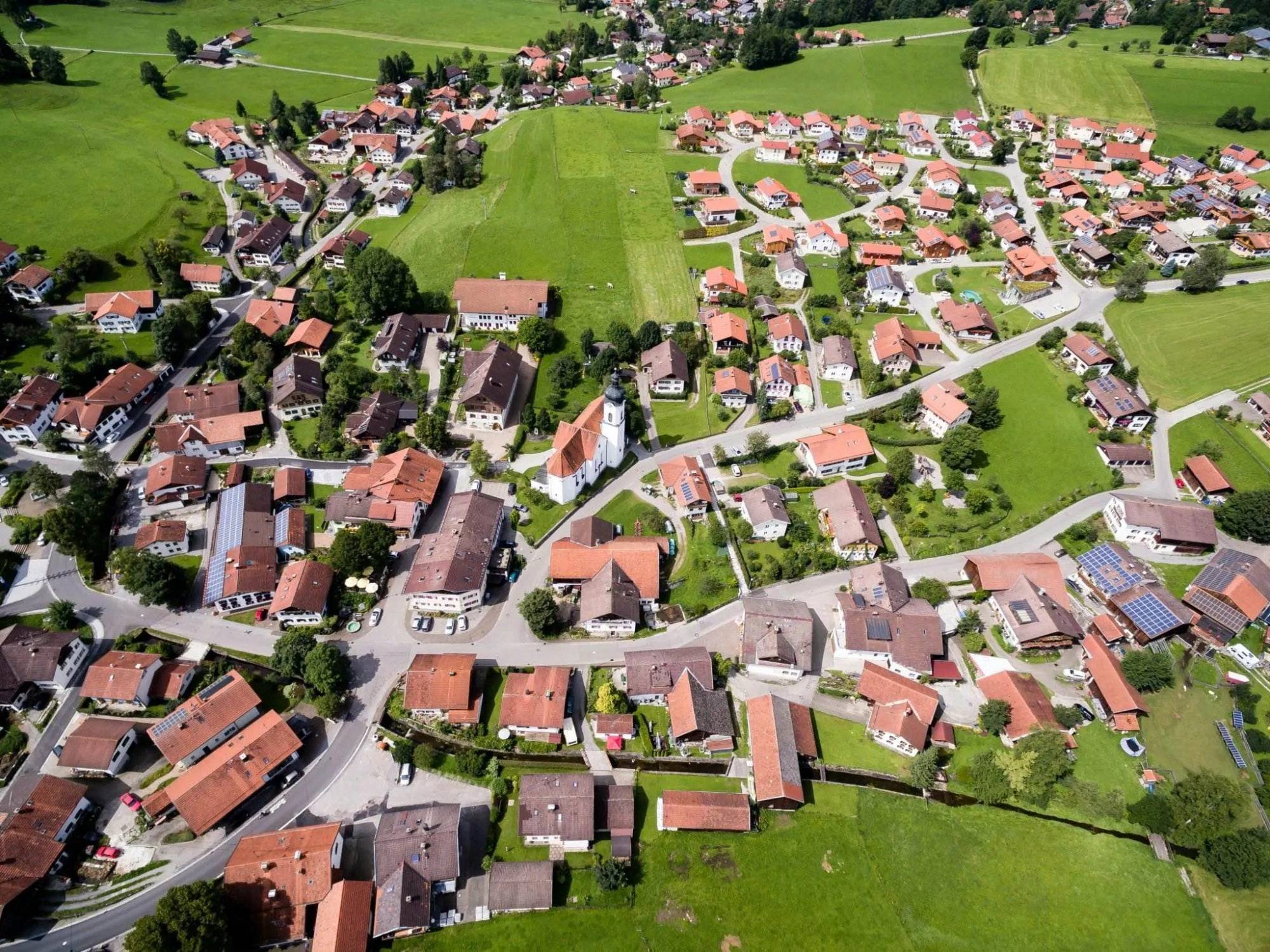
Every Olympics has a beating heart hidden behind the scenes: the Olympic village. It is not just a place to sleep, but a city within a city, a microcosm of languages, cultures, training and shared emotions. For Milan Cortina 2026, there will be three major villages: Milan, Livigno and Cortina d'Ampezzo. Each with profoundly different characteristics, needs and identities. But all with the same goal: to welcome athletes and let them feel the Olympic pulse.
Milan: Innovation and Urban Regeneration
In the heart of Roman Gate, one of the most dynamic urban hubs of the metropolis, will rise the Milan Olympic village, the largest of the three. Here we are building not just for the Olympics, but for the future. The project is being built on a former railway area, in an urban regeneration strategy that will transform an industrial void into a sustainable neighborhood.
The facilities will accommodate about 1,400 athletes and delegations, with modular housing, common spaces, green areas, a medical center and training spaces. The architectural concept is signed by international firms and includes the use of low-impact materials, renewable energy and soft mobility.
But the real strength is the legacy: after the Games, the buildings will become student housing, social housing, offices and services for the community. A tangible legacy, in true Milanese style.
Livigno: Compactness at High Altitude
Smaller and more collected, the Livigno Olympic Village will host about 1,000 people, mostly athletes in the snowboard and freestyle disciplines. The problem here is not space, but climate and logistics. At 1,800 meters above sea level, building is a technical challenge: you need durable materials, perfect facilities, and a design thought out for energy efficiency.
The project is integrated into the alpine landscape, with wood and glass structures, low visual impact and environmentally friendly solutions. The housing modules are close to the competition facilities to facilitate movement and reduce stress on the athletes. After the Games, the village will become tourist and residential housing, with great emphasis on seasonality and sustainability.
Cortina d'Ampezzo: Elegance and Tradition
In Cortina, where the history of the 1956 Olympics can be felt, the new Olympic village will be set up in a temporary structure designed to ensure logistical efficiency and minimal impact. It will not be built from scratch, but will use demountable and reusable solutions, in line with the principles of the "no waste" Olympic.
The housing will be modern, comfortable, and low carbon footprint, built close to alpine ski race sites. After the event, everything will be dismantled and relocated to other settings for housing and social projects, especially in the mountains.
Cortina chose the way of intelligent sobriety, combining its historical elegance with a practical and sustainable vision.
A Comparison in Three Attitudes
| Location | Type of structure | Estimated capacity | After the Olympics |
| Milano | New urban construction | 1,400 people | Student housing, public spaces |
| Livigno | Fixed alpine structures | 1,000 people | Tourist/residential accommodations |
| Cortina | Temporary structures | About 500 people | Dismantling and social reuse |
Olympic Villages: Beyond Hospitality
These villages are not simply dormitories: they are nerve centers of the Olympiad, where athletes meet, share dreams and values. Each architectural choice reflects a philosophy:
- Milan aims at theurban innovation;
- Livigno to the sustainability integrated into the landscape;
- Cortina to the intelligent flexibility.
Three villages, three visions of Italy, united under the same tricolor.



 Italiano
  English
  Русский
  Français
  Deutsch
  简体中文
简体中文 